- Home
- |
- News - Event
- |
- Science / Technology
Biwase Self-Manages Waste-to-Energy Technology from Design to Operation
That was the statement from Mr. Nguyen Van Thien, Chairman of the Board of Directors of Biwase, at the 8th Asian Waste Management and Waste-to-Energy Summit in 2024.
Biwase has ceased landfilling and officially put its waste-to-energy plant into operation at the beginning of 2024.
With economic development, rapid industrial growth, and urbanization, the pressure on waste and wastewater treatment is very high for many provinces and cities across the country. However, in Binh Duong province, there is no situation of waste backlog affecting the lives of residents or putting pressure on state management agencies.
In particular, in Binh Duong province, since August 1, 2023, the landfill at the Biwase - Binh Duong Waste Treatment Branch of the Binh Duong Water – Environment Corporation - Joint Stock Company (Biwase) has stopped accepting waste trucks, transitioning to a circular treatment method, recovering heat for electricity generation.
Thus, since August 1, 2023, 100% of the household waste received at the Biwase - Binh Duong Waste Treatment Branch has been treated in a circular and eco-friendly manner.
By January 12, 2024, Biwase continued to inaugurate a 5MW waste-to-energy plant and increased the capacity for sorting, recycling, and treating waste to 2520 tons per day.
After increasing the capacity of the waste treatment complex, Biwase's total invested capacity reached 2520 tons per day (the actual intake is only 2350 tons per day). Thus, Biwase has been and will continue to ensure the treatment of all waste and is investing in surplus capacity for the upcoming years if waste volume continues to rise.
This is also a contingency plan for the next few years to ensure the ability to receive and treat waste throughout Binh Duong province, transforming all daily household waste into various scientific and useful products, including renewable energy (electricity), organic fertilizers, and building materials, in line with the current trend of "waste as a resource" and the circular economy.
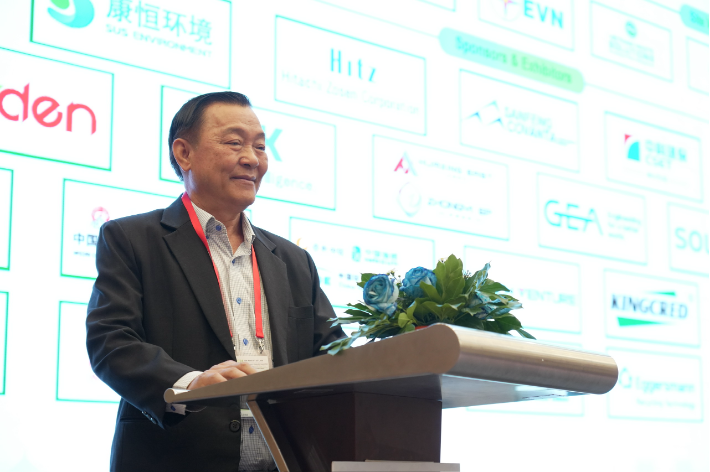
Mr. Nguyen Van Thien, Chairman of the Board of Directors of Biwase. Photo: Duy Bac
Speaking about the success of waste treatment in Binh Duong province at the 8th Asian Waste Management and Waste-to-Energy Summit on the morning of March 20, 2024, Mr. Nguyen Van Thien, Chairman of the Board of Directors of Biwase, shared that the company began participating in waste treatment in 2004, prior to which it mainly focused on water supply. The company has learned a lot of experience from developed countries such as Europe, Japan, South Korea, etc. Among these, no technology is optimal without waste sorting at the source. Currently, in Vietnam, there is no sorting at the source. After conducting surveys, the company began purchasing waste sorting equipment from the source to enable sorting from the beginning.
At Biwase, organic waste is composted to produce organic fertilizer, serving organic agriculture; plastic waste is recycled; iron, steel, and metals are collected and sold as scrap; construction materials are gathered to be used for ground leveling; other waste is burned, and the heat is recovered to generate electricity; organic sludge is dried to produce organic fertilizer; slag and inorganic sludge are mixed to produce concrete, concrete components, and interlocking bricks for sidewalk paving.
“Waste treatment in Binh Duong operates on a closed-loop system with multiple recycling workshops and three actively working divisions: one that seeks input business sources, another that seeks output markets for products like fertilizers, concrete bricks, and scrap materials, and a strong team responsible for designing, manufacturing, maintaining, and repairing equipment to ensure self-sufficiency in the production lines,” emphasized Mr. Nguyen Van Thien.
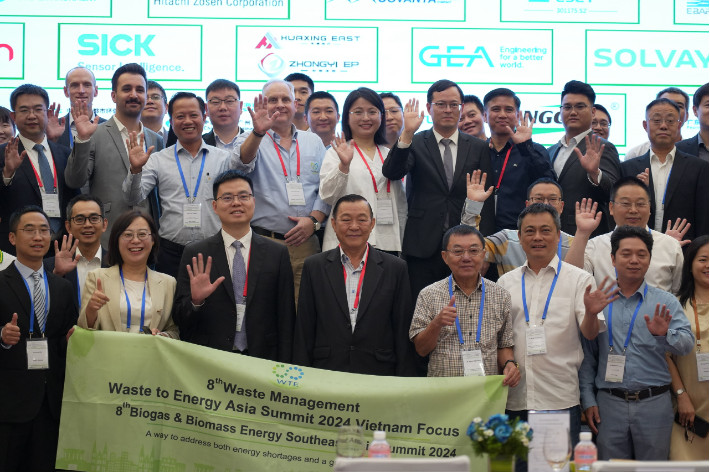
Overview of the 8th Asian Waste Management and Waste-to-Energy Summit 2024
Mr. Nguyen Van Thien emphasized technological self-sufficiency: “The company has mastered waste-to-energy technology. All collected waste is processed in a 100% closed-loop system, with no landfilling after treatment. All treatment lines, from fertilizer production to incinerators, are managed by the company's staff, from design and construction to operation and maintenance.”
Currently, Biwase has four waste treatment technology lines with a capacity of 2.520 tons per day, with a fermentation accumulation area of over 100.000 m³, a floor area of 30800 m², and a ripening workshop area of up to 56.800 m². The company also has two leachate treatment plants with a capacity of 1.000 m³ per day and several other recycling treatment lines, fully capable of receiving 100% of the province's household waste at its integrated complex. Additionally, there are two medical waste incineration plants with a capacity of 16 tons per day, and four mixed waste incineration plants with a capacity of 500 tons per day, including one plant with a capacity of 200 tons per day that recovers heat for electricity generation at a capacity of 5 MW.
The potential for converting waste into energy in Vietnam
In reality, the waste-to-energy (WTE) market in Vietnam is relatively small but has significant growth potential. The potential for energy recovery from solid waste in Vietnam is approximately 1.400 megawatts (MW) per year, which could contribute to the country's renewable energy goals and energy security. However, the application of WTE technology solutions remains modest. Despite the large volume of untreated municipal solid waste—about 25 million tons per year—WTE technology solutions are still very limited in Vietnam. As a result, most waste is still being sent to landfills.
The new Environmental Law (2020) is implementing sustainable solid waste management measures, creating many opportunities to attract investors to the waste treatment sector. Waste-to-Energy (WTE) technology is seen as a key solution in the coming years.
Furthermore, to achieve the goal of net-zero emissions by 2050, Vietnam will not only need significant capital but also effective technology and expertise in various sectors of the industry. These include efficient solutions for developing waste-to-energy projects and enabling the effective operation of the domestic energy market and collaboration with neighboring countries. International investors and technology providers are working with the Vietnamese government to meet the country's growing energy development needs.
Source: https://baodautu.vn/biwase-tu-chu-cong-nghe-dot-rac-thanh-nang-luong-tu-thiet-ke-toi-van-hanh-d211132.html
Science / Technology Other
Date: 21-12-2023
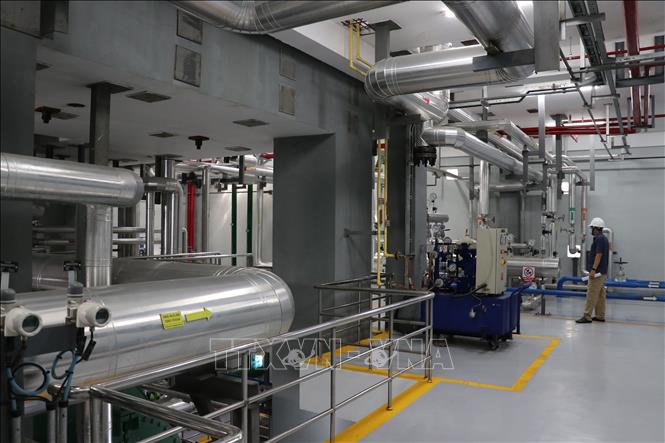
WASTE-TO-ENERGY TECHNOLOGY WITH A 5MW CAPACITY IN BINH DUONG
Date: 14-11-2013
Recycling municipal waste, it seems to be easy, but no easy
Date: 13-12-2013